My first South Indian wedding was my cousin Priya’s in 2018. As guests started leaving, small trays appeared with neat little packets—betel leaves, nuts, turmeric powder, kumkum, sometimes a coin or flowers. Everyone took one politely, but I had no idea what it was called or why it mattered.
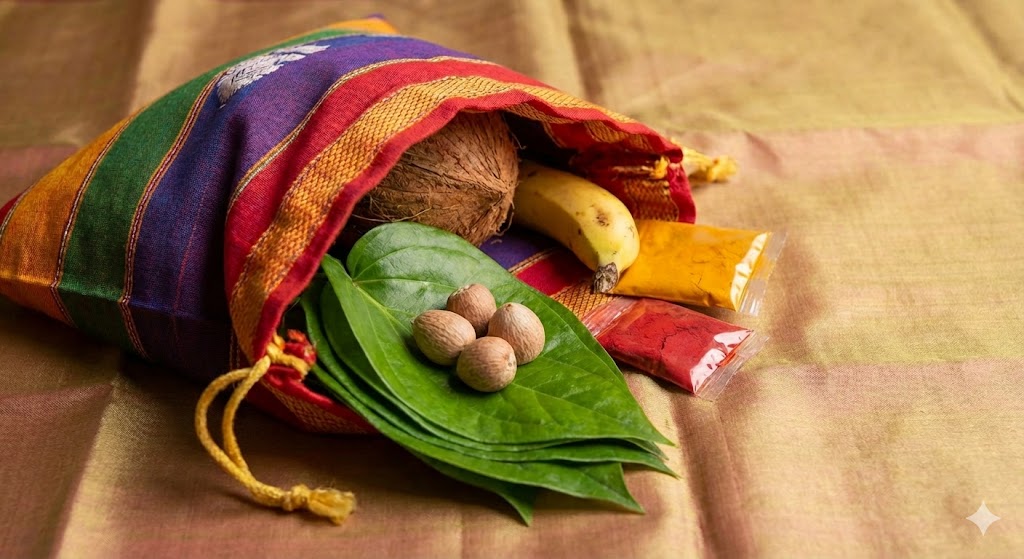
Turns out it was Thamboolam (also spelled Tambulam), and it’s not just a parting gift. It’s a tradition carrying centuries of meaning—spiritual blessings, marital prosperity, and a quiet “thank you” that feels more genuine than any modern return gift hamper.
Here’s everything you need to know about this beautiful ritual, why it still matters in 2026, and how it’s evolving with younger couples.
What Exactly Is Thamboolam?
Thamboolam is the traditional parting gift given to guests at the end of South Indian wedding ceremonies, housewarmings, and religious functions. The name comes from Tamil/Sanskrit roots meaning “betel leaf preparation.”
The Classic Contents
A proper Thamboolam packet contains:
Essential 6–8 items:
-
Betel leaves (2–4 leaves) – The star of the show
-
Betel nuts/areca nuts (2–4 pieces, often whole or sliced)
-
Turmeric powder (small quantity in paper cone)
-
Kumkum/vermilion (tiny pinch)
-
Vibhuti (sacred ash) – optional, for Shiva devotees
-
Flowers (marigold or jasmine)
-
Fruits (banana, coconut half, or pomegranate)
-
Coin (₹1, ₹5, or ₹11 for auspiciousness)
Presentation: Wrapped in colorful paper or placed in banana leaves, often in decorative trays carried by women.
Modern version: Smaller packets (just betel leaves + nuts + turmeric/kumkum) due to convenience, but purists stick to the full traditional set.
Why Betel Leaves? The Deep Symbolism
Each item has specific spiritual and cultural meaning. Betel leaves especially carry heavy symbolism:
Betel Leaves (The Heart of Thamboolam)
Spiritual significance:
-
Purity and auspiciousness: Betel leaves are considered sacred in Hindu tradition.
-
Long life and prosperity: Their heart shape symbolizes the heart of the marriage.
-
Truth and victory: In mythology, betel leaves were used in divine offerings.
Practical tradition:
-
Guests chew betel leaves lightly with nuts as a digestive after heavy wedding feasts.
-
The natural stimulant helps guests stay alert for long ceremonies.
Scientific angle: Betel leaves contain compounds that aid digestion and freshen breath—practical after wedding feasts.
Other Items and Their Meanings
| Item | Symbolism | Practical Use |
|---|---|---|
| Betel Nuts | Fertility, longevity | Mild stimulant, digestive aid |
| Turmeric | Purity, prosperity | Antibacterial, used in rituals |
| Kumkum | Marital bliss, fertility | Sacred mark for married women |
| Coin | Wealth, good fortune | Token prosperity |
| Fruits | Abundance, health | Edible takeaway |
This isn’t random—each item carries intention.
When and How Thamboolam Is Given
Timing: End of Ceremony
Traditional flow:
-
Main wedding rituals complete.
-
Mangalya dharanam (tying thaali) done.
-
Guests start departing.
-
Thamboolam trays appear near exit.
Who distributes: Usually married women (sumangalis) who bless the couple.
Modern adaptation: Sometimes given during reception as guests leave.
Regional Variations Across South India
Tamil Nadu:
-
Classic 8-item set.
-
Often includes slivers of coconut.
-
Paper cones for powders.
Kerala:
-
Slightly simpler—more emphasis on betel leaves and nuts.
-
Sometimes includes small banana leaves.
Karnataka:
-
Adds camphor or incense sticks.
-
Coconut pieces more prominent.
Andhra/Telangana:
-
Larger fruit portions.
-
Sometimes includes a small sweet.
Common across all: Betel leaves are non-negotiable—the name literally means “betel leaf preparation.”
Thamboolam vs. Modern Return Gifts
Younger couples often face the dilemma: traditional Thamboolam or trendy hampers?
Why Thamboolam Still Wins
Cultural depth: Every item has centuries of meaning—modern gift boxes can’t compete.
Eco-friendly: Biodegradable materials, no plastic waste.
Cost-effective: Full traditional set costs ₹25–50 per guest vs. ₹200+ for modern hampers.
Universal appeal: Every South Indian guest understands and expects it.
Authenticity: Shows respect for family elders and traditions.
The Modern Hybrid Approach
Many 2026 weddings do both:
Primary: Traditional Thamboolam for elders, close family, temple priests.
Secondary: Modern gifts (chocolates, keychains) for younger guests.
Smart combo: Thamboolam packet + one small modern item (₹80–120 total).
Cost Breakdown (2026 Pricing)
Traditional Full Thamboolam (per guest):
-
Betel leaves + nuts: ₹10–15
-
Turmeric/kumkum cones: ₹5–8
-
Flowers/fruit: ₹8–12
-
Coin: ₹1–5
-
Packaging: ₹5–10
-
Total: ₹29–50
Wholesale for 200 guests: ₹4,500–8,000 total.
Semi-customized (ready-made trays): ₹60–100 per packet.
Full modern hamper alternative: ₹200–400 per guest.
For 300 guests, that’s ₹60,000–1,20,000 vs. ₹9,000–15,000 for Thamboolam. The math is obvious.
DIY Thamboolam: How to Make Your Own
For smaller weddings (50–100 guests):
Materials Needed (Total ₹2,500–4,000)
-
Betel leaves: ₹800–1,200 (buy fresh morning of event)
-
Betel nuts: ₹400–600
-
Turmeric powder: ₹100
-
Kumkum: ₹100
-
Small fruits: ₹500–800
-
Coins: ₹100–200
-
Colorful paper/cones: ₹300–500
-
Decorative trays: ₹200–400 (rent or borrow)
Assembly Line (30–45 mins for 100 packets)
-
Prep stations: One person per item type.
-
Fold paper cones for powders (pre-make these).
-
Assemble: 2 betel leaves + 2 nuts + powders + fruit + coin.
-
Wrap neatly in colorful paper.
-
Stack in trays by 10s.
Pro tip: Do this 2–3 hours before guests leave. Betel leaves wilt if prepped too early.
Common Mistakes to Avoid
Mistake 1: Skipping betel leaves
Even modern couples must include them—it’s literally what “Thamboolam” means.
Mistake 2: Poor quality ingredients
Wilted leaves or stale nuts ruin the gesture. Buy fresh same day.
Mistake 3: Over-modernizing
Don’t replace tradition with plastic boxes. Blend, don’t substitute.
Mistake 4: Uneven distribution
Make sure every guest gets one. Running out looks careless.
Mistake 5: Wrong timing
Too early = leaves dry out. Too late = guests already gone.
Why Thamboolam Endures in 2026
In an era of ₹500 chocolate hampers and customized mugs, Thamboolam survives because:
Emotional weight: Every item whispers prayers for the couple’s future.
Generational bridge: Elders feel respected, youth learn tradition.
Universal language: Every South Indian guest “gets it” immediately.
Sustainable elegance: Zero plastic, fully biodegradable.
My cousin Priya (from that 2018 wedding) got married again last year—this time to someone from a different community. They still did Thamboolam. “It felt like home,” she said. Her North Indian in-laws loved learning the ritual.
Modern twist: Some couples now add a small card explaining each item’s meaning for younger/international guests. Elegant and educational.
Final Takeaway
Thamboolam isn’t “just a return gift.” It’s a living prayer—for the couple’s happiness, health, prosperity, and long life together. Each leaf, each nut, each pinch of turmeric carries intention from generations before you.
When guests walk away with those small packets, they’re carrying more than betel leaves. They’re carrying your family’s blessings.
In 2026, when everything else feels disposable, Thamboolam feels eternal.
Have you experienced Thamboolam at weddings? What’s your favorite memory of receiving or giving it? Share below—especially if you have regional variations from different South Indian communities!