I still remember my first real encounter with this tradition. We were at my cousin Ravi’s wedding reception in Lucknow—beautiful mandap, amazing Rajasthani food, filmi music blaring.
As the night wound down and guests started heading out, there was a dedicated return gift counter. Each guest got a neat packet—usually almonds or motichoor ladoos. But when I opened mine later at home, something fell out: a shiny ₹11 coin.
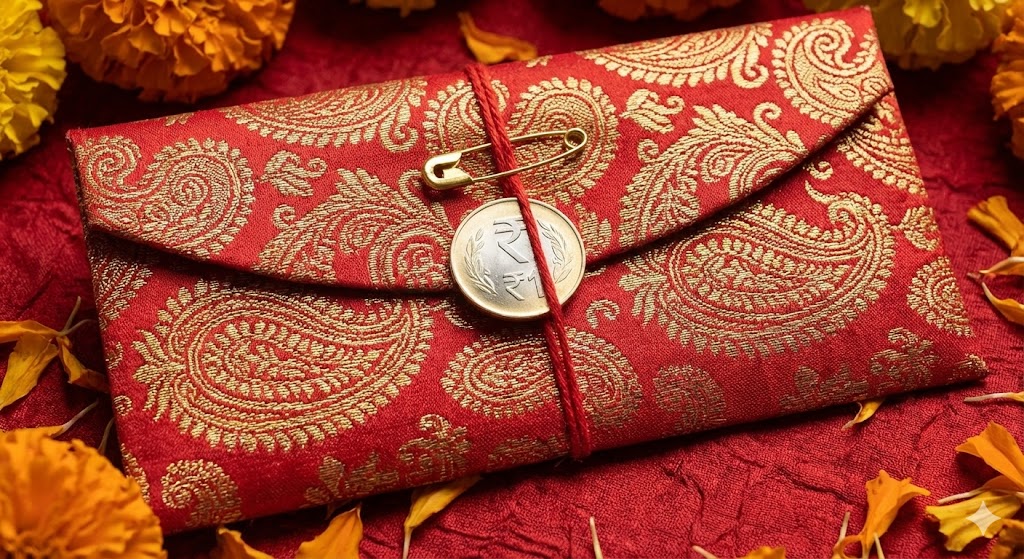
“Why just one coin?” I asked my mom. She smiled and said simply, “Shagun, beta. It’s for prosperity. Always odd numbers—never even.” That tiny piece of metal opened up a whole world of tradition I hadn’t understood.
Turns out, including coins in return gifts across India isn’t random or cheap—it’s deeply rooted in Hindu customs, Vedic numerology, astrology, and practical spirituality that still shapes weddings and celebrations in 2026.
Let me walk you through the complete story, from ancient origins to modern execution, so next time you’re planning an event, you’ll know exactly why (and how) to include this beautiful ritual.
What “Shagun” Actually Means (It’s More Than Money)
Shagun literally translates to “auspicious portion” or “good fortune share” in Hindi/Sanskrit. It’s any small token exchanged with pure intentions to invoke blessings, prosperity, and protection. Coins became the standard because:
-
Metal = Earth’s wealth: Gold, silver, copper—anything from the earth carries prosperity vibrations.
-
Physical and permanent: Paper sweets get eaten. Coins stay in wallets for months, carrying the blessing longer.
-
Universal accessibility: Even poor families could give ₹1 coins. Rich families gave ₹11 or ₹21. Intention > amount.
The unbreakable odd-number rule:
-
Even numbers (₹10, ₹50) complete cycles—inauspicious for new beginnings.
-
Odd numbers (₹1, ₹5, ₹11) start new cycles—perfect for weddings, housewarmings, new ventures.
Most sacred denominations (and why):
-
₹1: Pure humility, new beginnings
-
₹5: Panchamahabhuta (earth, water, fire, air, ether)
-
₹11: 1+1=2 (perfect marital union)
-
₹21: 2+1=trinity (Brahma/Vishnu/Shiva blessings)
-
₹51: 5+1=Shiva’s blessings
The Ancient Roots: Vedic Wisdom, Not Superstition
This isn’t some recent trend. Shagun coins trace back to Vedic rituals mentioned in texts like Manusmriti and Grihya Sutras. Here’s the spiritual logic:
1. Completes the Sacred Exchange
When a guest attends your wedding/housewarming:
-
They give you a gift (₹500–5,000 typically).
-
You give return gift (sweets/dry fruits).
-
Shagun coin seals the circle—something received, something returned with blessing.
Spiritual math: Guest’s gift → your gratitude → coin’s prosperity → cycle complete.
2. Invokes Lakshmi (Wealth Goddess)
Metal from earth = Lakshmi’s domain. Vedic priests instructed giving metal tokens during rituals to ensure the family’s future wealth.
3. Nazar (Evil Eye) Protection
Shiny metal surfaces reflect negative energy. When 300 guests compliment your wedding (“Beautiful baraat! Amazing food!”), their unintentional jealousy gets absorbed by the coin, not your family’s good fortune.
Practical proof: You’ll notice many families keep shagun coins in their home altar or wallet for exactly this reason.
How Shagun Coins Appear in Return Gifts (By Event Type)
Weddings (Most Common, Most Symbolic)
Classic North Indian wedding shagun:
Almonds (20g) packet

+ ₹11 coin

+ Red cloth pouch/envelope

= ₹42 total per guest
Why weddings specifically:
-
Marriage = biggest life transition.
-
Shagun blesses the couple’s joint prosperity.
-
250 guests × ₹42 = ₹10,500 (very reasonable).
Housewarming (Griha Pravesh)
Coin choice: ₹21 (household + family prosperity).
Ladoo or peda

+ ₹21 coin

+ Kalawa thread

= ₹38 total
Baby Showers/Naming Ceremonies (Godh Bharai)
Coin choice: ₹11 or ₹51 (new life blessings).
Kumkum box + sweets

+ ₹11 coin

+ Tiny silver anklet (optional)

= ₹55 total
Festivals (Diwali, Holi Return Gifts)
Coin choice: ₹5–11.
Homemade mithai

+ ₹5 coin

+ Diyas

= ₹28 total
Corporate offices: ₹5 coin + Diwali sweets = perfect employee thank-you (₹25 total).
Regional Variations: Every State Does It Differently
India’s diversity shines here. Same tradition, different flavors:
North India (Delhi, UP, Haryana, Rajasthan)
-
₹11 standard.
-
Red cloth pouch (manglik color).
-
Coin often pierced (threaded necklace style).
-
Paired with badam/kaju packets.
Delhi auntie example: “₹11 coin in red envelope with 10 badam. That’s proper shagun.”
Maharashtra
-
₹21 preferred (2+1=trinity).
-
With kokis (sweet semolina crisps) or besan ladoo.
-
Coin comes with tilgul (sesame-jaggery).
Gujarat
-
₹11 or ₹51.
-
Paired with gathiya, jalebi, or fafda.
-
Sometimes ₹101 for elite weddings (but rare).
South India
-
₹1 traditional (pure simplicity).
-
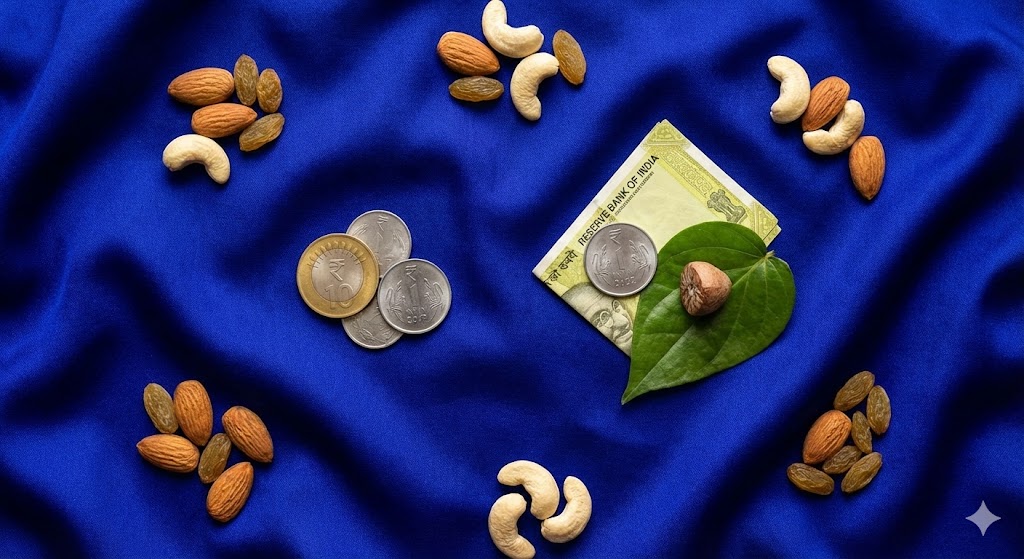
Part of Thamboolam (betel leaves + coin + turmeric).
-
Wealthy families use silver rupees.
Bengal
-
₹5 coins standard.
-
With mishti doi, rasgulla, or sandesh.
-
Coin + betel paan preparation.
Universal truth: Always odd rupees. Always with food/spiritual item.
Real 2026 Wholesale Pricing (No Guesswork)
Coin costs (stationery shops, bulk):
-
₹1 coins: ₹0.75–0.85 each
-
₹5 coins: ₹4–4.50 each
-
₹11 coins: ₹8.50–9.50 each
-
₹21 coins: ₹17–19 each
Complete return gift examples (per guest):
| Event | Main Item | Coin | Packaging | Total |
|---|---|---|---|---|
| Wedding | 20g badam | ₹11 | Red pouch | ₹42 |
| Griha Pravesh | 1 peda | ₹21 | Envelope | ₹38 |
| Baby Shower | Kumkum box | ₹11 | Kraft paper | ₹35 |
| Diwali | Homemade sweet | ₹5 | Plastic box | ₹28 |
| Office | Diwali mithai | ₹5 | Box | ₹25 |
Bulk savings example:
-
300 wedding guests × ₹42 = ₹12,600
-
Vs. modern hampers × ₹250 = ₹75,000
-
Savings: ₹62,400
Pro sourcing tip: Stationery shops near temples/schools sell coins 20% cheaper than banks.
The Packaging Ritual (Details Matter)
Never give loose coins. Always proper presentation:
Traditional Methods
-
Red cloth pouch (₹2–5 each, bulk).
-
Paper cone/envelope with coin inside sweets packet.
-
Betel leaf wrap (South India).
-
Kalash-shaped box (₹8–12, festive).
Modern Elegant Options
-
Kraft paper envelope with gold sticker seal (₹3).
-
Jute pouch (eco-friendly, ₹5–8).
-
Seed paper envelope (plantable, ₹10).
Handing etiquette:
-
Right hand only.
-
Elders first.
-
Touch feet if giving to much older relatives.
The Science Behind Why Coins Feel Special
Psychological + neurological effects:
-
Tactile memory: Cold metal creates stronger brain connections than paper.
-
“Found money” effect: Unexpected coins trigger dopamine (pleasure chemical).
-
Weight bias: Heavier = more valuable (subconscious judgment).
-
Shine reflex: Humans biologically attracted to reflective surfaces.
Practical staying power:
-
Sweets eaten → gone.
-
Coin stays in wallet/purse 3–6 months.
-
Gets spent → spreads prosperity further.
Many couples frame their first shagun coin collection from wedding. Tradition → heirloom.
2026 Evolution: Tradition Meets Modernity
Gen Z adaptations keeping shagun alive:
-
Digital shagun apps: Physical coin + QR code to digital red envelope.
-
Sustainable packaging: Jute/seed paper pouches.
-
Minimalist weddings: Just ₹11 coin + handwritten note (₹12 total).
-
Corporate Diwali: ₹5 coin + mithai = perfect ₹25 employee gift.
Proof it works: My 27-year-old cousin (software engineer, atheist) still demands ₹11 coins at weddings. “Lucky charm,” he shrugs.
Etiquette Rules Every Host Must Know
When giving:
-
Odd amounts only (₹1,5,11,21,51).
-
Elders/priests: ₹21–101.
-
Close family: ₹21.
-
Regular guests: ₹11.
-
Right hand presentation.
When receiving:
-
Touch feet of elders giving shagun.
-
Say “Shagun” or “Dhanvaadaagu.”
-
Don’t count/examine immediately (disrespectful).
Wedding protocol:
-
Bride/groom families exchange shagun with each other.
-
Guests receive from couple’s parents.
8 Common Mistakes That Ruin Shagun
1. Even money: ₹10, ₹50 = bad energy. Always odd.
2. No coin at all: Guests notice, feels incomplete.
3. Flashy overpackaging: ₹200 box overshadows ₹11 coin’s humility.
4. Same for everyone: Priests get ₹51+, not ₹11.
5. Loose coins: Always pouch/envelope.
6. Last-minute sourcing: Wholesale needs 2–3 days.
7. Skipping food pairing: Coin alone feels stingy.
8. Left-hand giving: Only right hand (auspicious).
Why Shagun Survives When Everything Else Fades
In 2026—Amazon hampers, customized mugs, chocolate towers—that ₹11 coin endures because:
Universal: Every Indian instantly understands.
Inclusive: ₹1–₹101, anyone can participate.
Sustainable: Zero plastic waste.
Emotional: Triggers childhood wedding memories.
Practical: Stays longer than perishables.
Proof point: My friend’s startup office does ₹5 shagun coins + Diwali sweets for 50 employees. Cost: ₹1,250. Impact: Everyone kept the coins. Zero waste.
Your Action Plan: Perfect Shagun Next Event
Week 1: Decide denomination (₹11 weddings, ₹5 festivals).
Week 2: Source coins wholesale (stationery near temples).
Day before: Buy sweets/dry fruits fresh.
Event day: Prep pouches morning of (coins wilt in heat).
Distribution: Elders first, right hand, smiles.
Sample 200-guest wedding:
200 badam packets: ₹6,000

200 × ₹11 coins: ₹1,800

200 red pouches: ₹800

Labor/packing: ₹400

TOTAL: ₹9,000

Per guest: ₹45
vs. modern hampers: ₹50,000+
Shagun = tradition + savings + blessings.
Final Thought: The Weight You Carry Forward
That ₹11 coin weighs 5 grams in your palm. But when you slip it into your wallet, you’re carrying:
-
Your family’s prayers
-
Generations of unbroken tradition
-
Lakshmi’s promise of prosperity
-
Protection from unseen negativity
Next time you feel that familiar metallic clink in a wedding return gift packet, pause. You’ve just received something whose value multiplies every time you think of it.
What’s your family’s shagun ritual? ₹11 coins, ₹21 notes, regional specialties? Drop it in the comments—love discovering how every community keeps this beautiful tradition alive!