Indian Traditions

Explore the cultural significance of gifting in India. Find traditional return gift ideas for Weddings, Housewarming (Griha Pravesh), Baby Showers (Godh Bharai), and festivals like Diwali and Navratri.

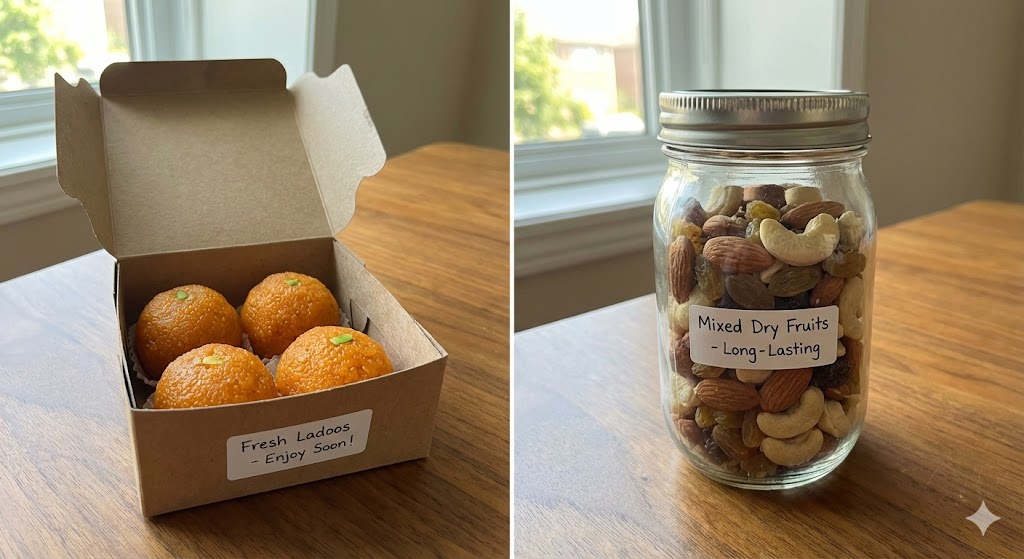
Side-by-side comparison showing fresh motichoor ladoos with a short shelf life versus a long-lasting jar of mixed dry fruits for return gifts.

Dry Fruits vs. Indian Sweets: Which is the Safer Return Gift?

Two years ago, I made a mistake that still makes me cringe. My close friend Meena’s mother was celebrating her 60th birthday. A proper, traditional celebration—130 guests, full lunch, live bhajan singing, the works. I helped Meena plan the return gifts. We decided on motichoor ladoos from a well-known local halwai. Fresh, ghee-laden, beautifully boxed, […]

Dry Fruits vs. Indian Sweets: Which is the Safer Return Gift? Read More »
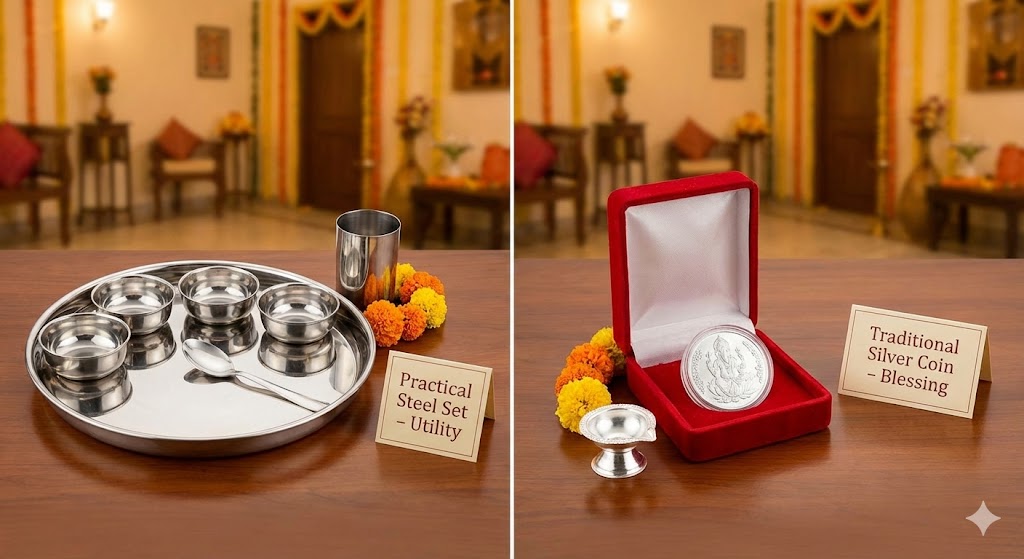
Housewarming (Griha Pravesh) Etiquette: Steel vs. Silver Gifts

Housewarming (Griha Pravesh) Etiquette: Steel vs. Silver Gifts

My neighbor Ramesh bhai moved into his new flat in our building last November. Beautiful 3BHK, four years of savings, the whole family flying in from Kanpur for the ceremony. We’re close enough that I was invited for the actual Griha Pravesh puja—not just the party after. As guests started arriving with gifts, I started

Housewarming (Griha Pravesh) Etiquette: Steel vs. Silver Gifts Read More »

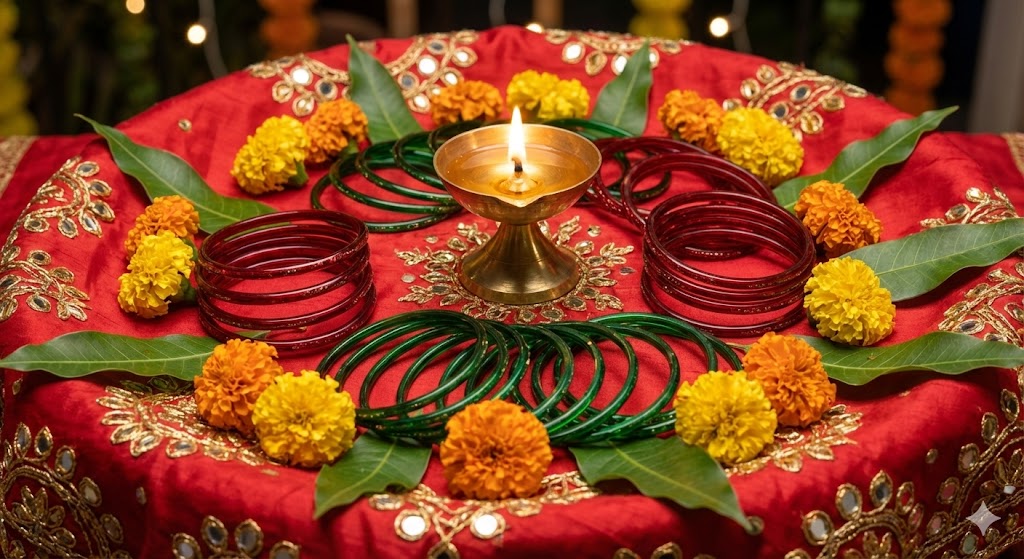
A traditional Indian Mehendi ceremony thaal covered in a red cloth, with green and red glass bangles, marigold flowers, and a lit diya.

Haldi & Mehendi Ceremonies: The Meaning Behind Gifting Bangles

My cousin Sonal’s Mehendi ceremony was the evening before her wedding. Fifty women crowded our rooftop in Dadri—strings of marigold lights, thick smell of mehendi paste, Bollywood songs playing from a Bluetooth speaker balanced on a plastic chair. Every auntie had an opinion about the design. Every dadi had a story about her own Mehendi

Haldi & Mehendi Ceremonies: The Meaning Behind Gifting Bangles Read More »

Navratri Kanjak Gifting Rules & Budget Guide (2026)

Navratri & Kanjak: Traditional Gifting Rules for Little Girls

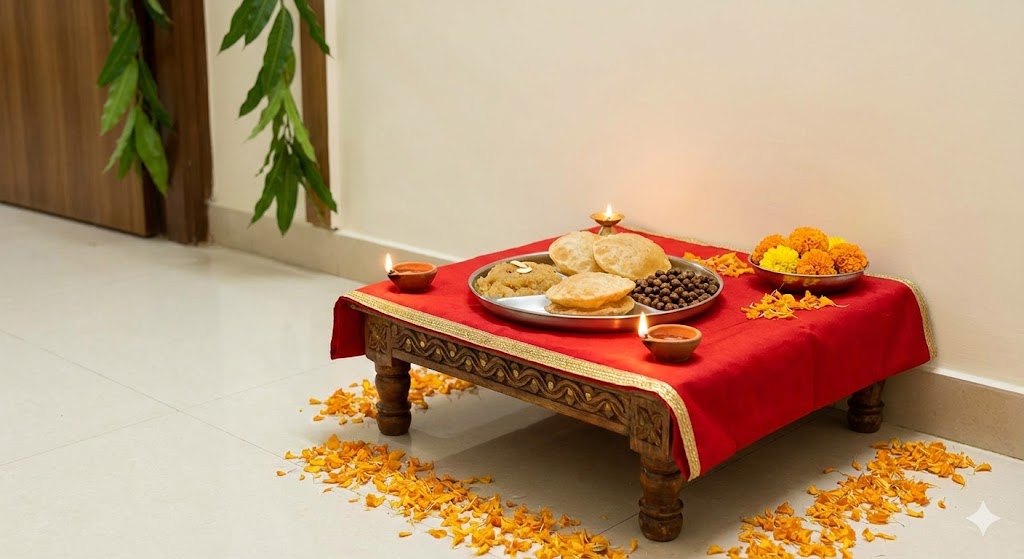
Every year on Ashtami or Navami, my mother would wake me up at 5 AM with that familiar announcement: “Kanjak aa rahi hain, taiyaar ho jao.” Within two hours, our home would transform. The floor freshly mopped, marigold petals at the entrance, a small wooden chowki covered in red cloth, diyas lit, and the smell

Navratri & Kanjak: Traditional Gifting Rules for Little Girls Read More »

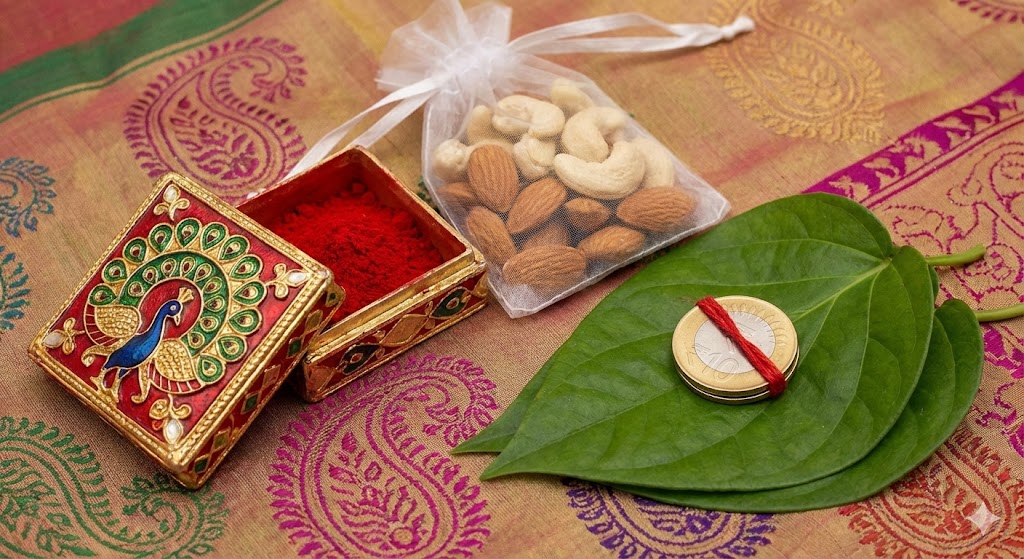
Traditional North Indian Godh Bharai return gift set featuring a decorative kumkum box, a pouch of dry fruits, and an ₹11 shagun coin on betel leaves.

Return Gift Traditions for Baby Showers (Godh Bharai) Across States

My sister-in-law’s Godh Bharai ceremony last April remains one of my favorite family memories. We’re from a small town in Uttar Pradesh, so we followed the classic North Indian tradition—red chunari draped over the expectant mother, conch shells blowing during aarti, the whole family gathered in our courtyard. Laughter, teasing, blessings everywhere. As guests started

Return Gift Traditions for Baby Showers (Godh Bharai) Across States Read More »

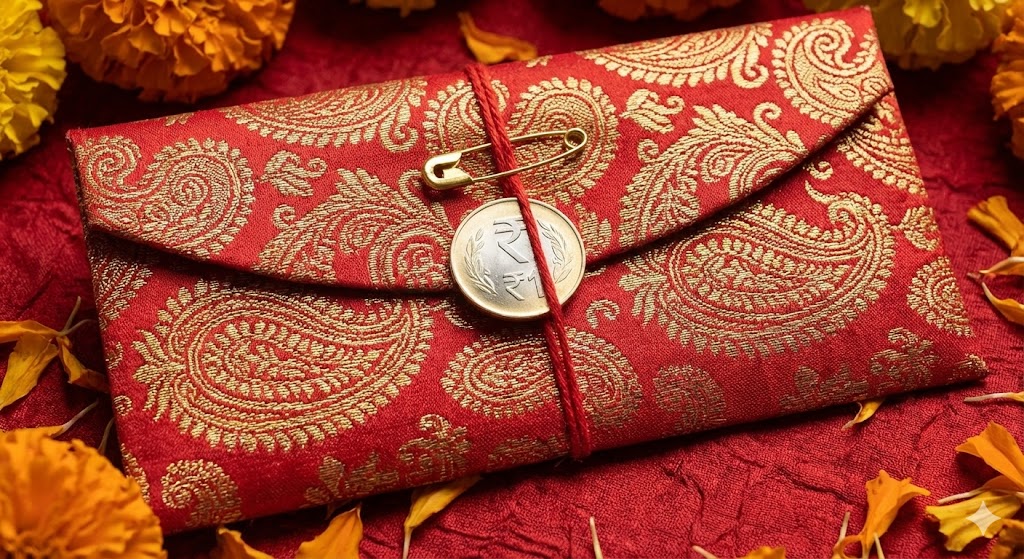
A traditional red and gold silk Shagun envelope with a ₹1 coin attached, symbolizing an auspicious gift in Indian culture.

Why We Give Coins (“Shagun”) with Return Gifts in India

I still remember my first real encounter with this tradition. We were at my cousin Ravi’s wedding reception in Lucknow—beautiful mandap, amazing Rajasthani food, filmi music blaring. As the night wound down and guests started heading out, there was a dedicated return gift counter. Each guest got a neat packet—usually almonds or motichoor ladoos. But

Why We Give Coins (“Shagun”) with Return Gifts in India Read More »

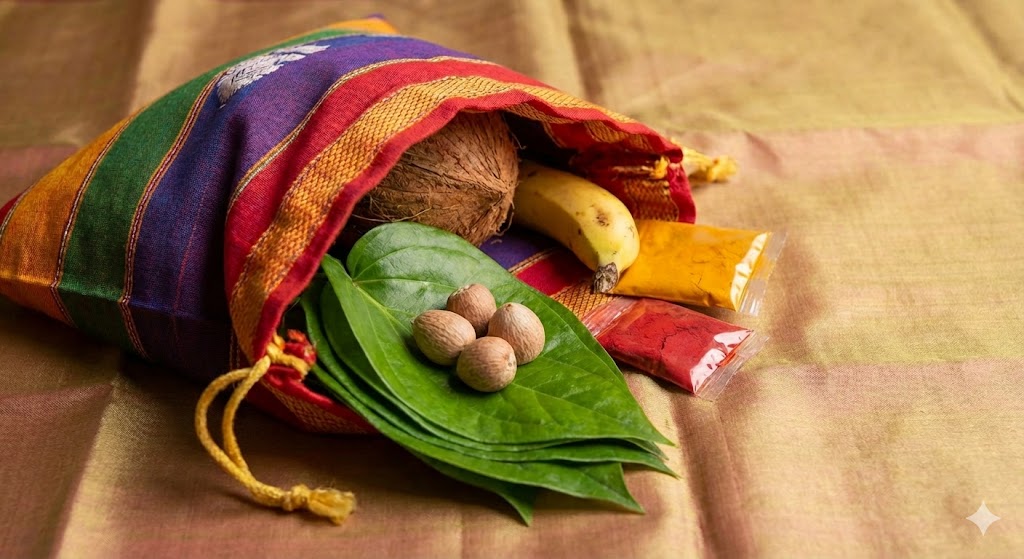
Close-up of fresh green betel leaves and betel nuts on a banana leaf, symbolizing prosperity and blessings in Hindu culture.

The Significance of “Thamboolam” (Betel Leaves) in South Indian Weddings

My first South Indian wedding was my cousin Priya’s in 2018. As guests started leaving, small trays appeared with neat little packets—betel leaves, nuts, turmeric powder, kumkum, sometimes a coin or flowers. Everyone took one politely, but I had no idea what it was called or why it mattered. Turns out it was Thamboolam (also spelled Tambulam),

The Significance of “Thamboolam” (Betel Leaves) in South Indian Weddings Read More »