My neighbor Ramesh bhai moved into his new flat in our building last November. Beautiful 3BHK, four years of savings, the whole family flying in from Kanpur for the ceremony. We’re close enough that I was invited for the actual Griha Pravesh puja—not just the party after.
As guests started arriving with gifts, I started mentally cataloguing what people brought. My colleague Sunita brought a brass Ganesha idol (₹800). One auntie brought a steel dinner set in a red box.
Another uncle—clearly doing well for himself—quietly handed over a small velvet box with a silver coin inside. Two families brought matching copper water jugs. And three people, independently, brought non-stick kadai sets from different brands.
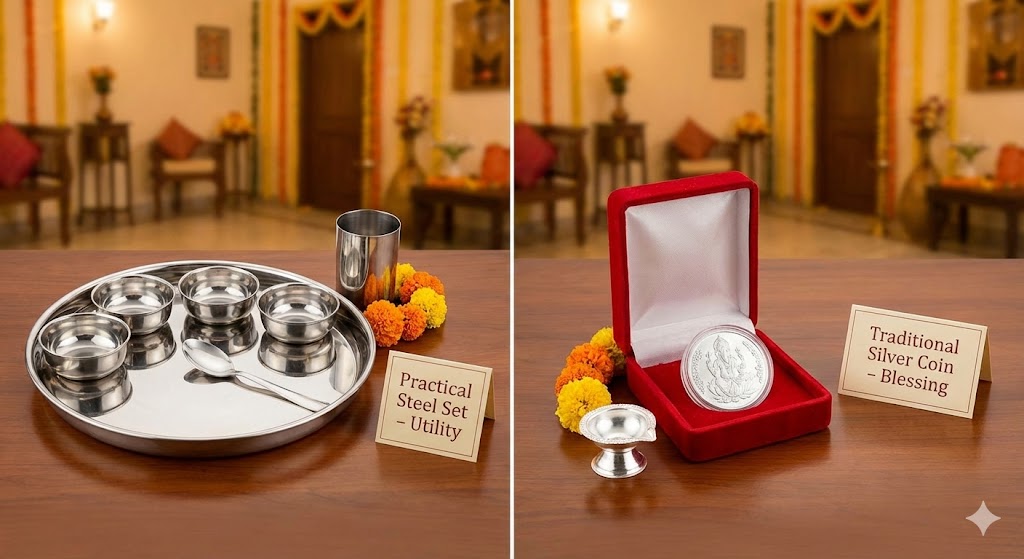
Ramesh bhai was gracious about everything. But his mother—sharp, traditional, has seen fifty Griha Pravesh ceremonies—pulled me aside and said: “Steel is fine. But silver is blessing. People forget the difference.”
That one line stuck with me. Because she wasn’t being snobby about cost. She was talking about intention and symbolism—and there’s a real difference between how these materials are understood in Indian housewarming tradition.
If you’re attending a Griha Pravesh soon, or hosting one and planning return gifts, here’s the complete breakdown of what to give, why it matters, and what 2026 pricing looks like.
What Griha Pravesh Actually Celebrates
Griha Pravesh literally means “entering the home” (griha = home, pravesh = entry). It’s not just a housewarming party. It’s a sacred threshold ritual rooted in Vastu Shastra—the ancient Indian science of space and energy.
The ceremony does three things:
-
Purifies the space (removing negative energy left by construction, previous occupants, or the land)
-
Invites positive energy through specific rituals, materials, and prayers
-
Seeks protection for the family beginning a new life chapter
Core rituals include:
-
Sprinkling Ganga jal throughout the home
-
Boiling milk until it overflows (prosperity symbolism)
-
Lighting diyas at every threshold
-
Entering first with Ganesha idol (remover of obstacles)
-
Performing full Vastu puja
Everything—including gifts—should support this energy of prosperity, protection, and new beginnings. This is why random gifts (electric kettles, showpieces from Amazon) feel slightly off even when well-intentioned. They carry no traditional intention.
The Core Question: Why Does Material Matter?
In Hindu tradition, different metals carry different spiritual frequencies (yes, this predates modern physics, but the logic is consistent across Vedic texts):
Copper: Health, immunity, water purification
Brass: Power, prosperity, Lakshmi’s domain
Steel: Practicality, durability, modern utility
Silver: Purity, wealth, Lakshmi direct association
Gold: Supreme prosperity (gifted only in very intimate relationships)
The reason gifts at Griha Pravesh are almost always metal—not plastic, not glass, not wood—is this material hierarchy. Metal gifts carry lasting energy that non-metal items simply don’t in this tradition.
Now let’s break down the two most commonly gifted materials and where each belongs.
Steel: The Practical, Universally Safe Choice
Steel became dominant in Indian households post-1960s when stainless steel production made quality cookware accessible. Today it’s the default “safe” housewarming gift that nobody can complain about.
Why Steel Works
Durability: A quality steel dinner set lasts 15–20 years.
Universal utility: Every Indian kitchen uses steel—for cooking, serving, storing.
Budget flexibility: ₹400 steel katori set to ₹4,000 premium dinner set.
Non-offensive: Steel offends nobody, suits every kitchen aesthetic.
What to Give (Steel Options)
Budget ₹500–1,000:
-
Steel katori set (6 pieces): ₹400–600
-
Steel puja thali with diya: ₹500–800
-
Steel spice box (masala daani): ₹450–700
Budget ₹1,000–2,500:
-
Full steel dinner set (18–24 pieces): ₹1,200–2,200
-
Branded steel casserole set: ₹1,000–1,800
-
Steel water jug set: ₹800–1,200
Budget ₹2,500–5,000:
-
Premium steel cookware set: ₹2,500–4,500
-
Stainless steel handi + accessories: ₹2,000–3,500
-
Branded triply steel pan set: ₹3,000–5,000
Steel’s Limitation
Here’s what Ramesh bhai’s mother meant: steel is a practical gift, not a spiritual one.
Nobody in Hindu tradition says “gift steel for prosperity.” Steel doesn’t appear in Vastu Shastra recommendations for Griha Pravesh. It’s valued for utility, not intention.
When you bring steel, you’re saying: “Here’s something useful for your home.”
When you bring silver, you’re saying: “Here’s my blessing for your prosperity.”
Both are valid. But they communicate differently.
Silver: The Traditional Blessing Metal
Silver at Griha Pravesh isn’t about showing off wealth. It’s about transferring blessings.
Why Silver Is Spiritually Significant
Vastu Shastra specifically recommends silver for new home rituals because:
-
Silver is associated with Lakshmi (wealth goddess)
-
It purifies spaces (antibacterial properties support this)
-
Silver items used in puja amplify prayers
-
Silver coins are considered direct wealth blessings for the new home
Historical context: Before steel existed, only copper, brass, and silver were household metals in India. Silver was the aspirational metal—what every family wanted in their home for puja and special occasions. Gifting silver said: “I’m giving you what was once precious.”
That emotional weight hasn’t disappeared even though silver has become more accessible.
Silver Gift Options (2026 Pricing)
Budget ₹500–1,500:
-
Silver-plated puja thali: ₹600–1,000
-
Small silver coin (5–10 grams, 999 purity): ₹500–900
-
Silver-plated Lakshmi-Ganesha idol: ₹700–1,200
Budget ₹1,500–5,000:
-
20-gram silver coin with Lakshmi engraving: ₹1,500–2,000
-
Silver katori set (small, 2 pieces): ₹2,000–3,500
-
Silver-plated puja bell + diya set: ₹1,500–2,500
Budget ₹5,000+:
-
50-gram silver Lakshmi-Ganesha coin: ₹4,500–6,000
-
Full silver puja thali (925 purity): ₹6,000–15,000
-
Silver murti (deity idol): ₹5,000–25,000
Where to Buy Authentic Silver
-
Tanishq, Kalyan, Malabar: Certified purity, receipts provided.
-
MMTC-PAMP: Government-certified coins, best for investment-grade silver.
-
Local jewellers: Check hallmark (BIS 925 for sterling silver).
-
Temple shops: Often sell silver items at fairer prices.
Important: Always ask for BIS hallmark. “Silver-plated” ≠ silver. Don’t buy plated items thinking they’re real silver.
The Full Comparison: Steel vs. Silver
| Factor | Steel | Silver |
|---|---|---|
| Spiritual meaning | Utility, durability | Prosperity, Lakshmi’s blessing |
| Vastu Shastra | Not specifically recommended | Strongly recommended |
| Relationship context | Acquaintance, colleague | Close friend, family |
| Budget range | ₹400–5,000 | ₹500–25,000+ |
| Lasting value | Practical use | Emotional + financial |
| Appropriate when | Large guest groups | Intimate ceremonies |
While steel and silver dominate the conversation, Vastu Shastra and tradition recommend several other categories:
Brass and Copper Items
Brass Ganesha idol: Most classic Griha Pravesh gift. Placed at entrance, removes obstacles.
Copper water vessel: Health benefits + spiritual significance.
Brass urli: Decorative bowl with flowers and water, symbolizes prosperity.
Cost: ₹500–5,000 depending on size and craftsmanship.
Plants (Increasingly Popular)
Tulsi plant: Purifies air, sacred to Vishnu, appropriate for any home.
Money plant: Growth, prosperity, Vastu-approved.
Lucky bamboo: Modern, low-maintenance, auspicious.
Cost: ₹300–1,500 depending on size and pot.
Decorative Diyas and Lamps
Brass diya sets: Light = removes darkness/negativity.
Silver diya: Both light symbolism + silver blessing.
Himalayan salt lamp: Modern Vastu-approved addition.
Cost: ₹700–3,000.
Return Gifts for Griha Pravesh Guests
Now the host side: what do you give guests coming to your Griha Pravesh?
This is different from wedding return gifts—Griha Pravesh return gifts should feel like a piece of your new home’s blessings shared with guests.
Traditional Return Gift Options (Per Guest)
Budget ₹50–100:
• Mini brass diya: ₹25

• Small sweets packet: ₹20

• ₹21 shagun coin: ₹18

• Red envelope: ₹2

Total: ₹65
Budget ₹100–200:
• Small brass/copper katori: ₹60

• Ladoo or modak (2 pieces): ₹20

• ₹21 shagun: ₹18

• Kumkum + haldi: ₹8

• Jute pouch: ₹6

Total: ₹112
Budget ₹200–400:
• Silver-plated puja item (small): ₹120

• Dry fruit packet (20g): ₹35

• ₹51 shagun: ₹48

• Premium packaging: ₹15

Total: ₹218
What Works Best as Griha Pravesh Return Gift
Indian gifting blogs and Vastu guides consistently recommend these as Griha Pravesh return items:
-
Mini brass diyas (₹25–40 each): Traditional, auspicious, universally appreciated.
-
Small plants (money plant, succulent): Living blessing guests take home.
-
Copper tumblers/glasses: Health + prosperity symbolism.
-
Scented candles: Modern homes love them, spiritually acceptable.
-
Sweet boxes + shagun: Never wrong, always complete.
Etiquette Rules Every Guest and Host Must Know
For Guests Bringing Gifts
Timing: Arrive during or just after puja, not during the ritual itself (interrupts ceremony).
Presentation:
-
Wrap in red, gold, or saffron paper (auspicious)
-
Never black or white wrapping alone
-
Card should say “Shubh Griha Pravesh” not generic “Congratulations”
Materials to avoid bringing:
-
Sharp items (scissors, knives = severs relationships in belief)
-
Clocks (associated with death in some traditions)
-
Black items (inauspicious for new beginnings)
-
Second-hand anything
What elders will notice immediately:
-
Silver = respected, thoughtful
-
Branded practical item = acceptable
-
Cheap plastic showpiece = quietly judged
For Hosts Giving Return Gifts
Distribution timing: After puja, during meal/prasad, as guests leave.
Presentation: Red pouch or kraft box. Include ₹21 shagun always.
Personal touch: “Shubh Griha Pravesh” tag, your family name.
The Real Decision Matrix: What to Give Whom
Use this when you’re standing in the market unsure what to buy:
Colleague or acquaintance you’re not very close to:
→ Steel dinner set or copper vessel (₹800–1,500). Safe, practical, appreciated.
Good friend, your age:
→ Brass Ganesha + sweets + ₹21 shagun (₹1,200–2,000). Personal + traditional.
Close family member (maasi, chacha, cousin):
→ Silver coin (10–20 grams) or silver puja thali (₹1,500–4,000). This is where silver is expected.
Very close (parents, siblings):
→ Silver idol or premium silver item (₹3,000–15,000). Blood relationships deserve real silver.
Boss or mentor:
→ Premium brass Ganesha or copper urli (₹1,500–3,000). Impressive without being too personal.
2026 Budget Guide: Actual Shopping List
For 100 guests’ return gifts (Griha Pravesh scale event):
OPTION A (₹65/guest):

100 mini brass diyas × ₹25: ₹2,500

100 ladoo packets × ₹18: ₹1,800

100 × ₹21 shagun: ₹1,800

100 red pouches: ₹400

TOTAL: ₹6,500100 copper katoris × ₹65: ₹6,500
100 sweet packets × ₹20: ₹2,000
100 × ₹21 shagun: ₹1,800
Packaging: ₹600
TOTAL: ₹10,900
OPTION C (₹200/guest – Premium):
100 silver-plated items × ₹120: ₹12,000
100 dry fruit packets × ₹35: ₹3,500
100 × ₹51 shagun: ₹4,800
Premium packaging: ₹1,000
TOTAL: ₹21,300
Why This Tradition Makes Practical Sense Too
I want to address the skeptics reading this: “Why does it matter if I bring steel or silver? A gift is a gift.”
Here’s the practical answer:
Steel dinner sets get used, chipped, forgotten. After 5 years, nobody remembers who gave it.
A 5-gram silver coin with Lakshmi engraved sits in a family’s puja ghar for decades. It gains value year over year (silver prices rise). It gets passed to children. It becomes part of the home’s identity.
For ₹700—roughly the cost of that steel katori set—you can give something that will genuinely outlast the home itself.
That’s the difference Ramesh bhai’s mother was explaining. Not class, not cost. Permanence of intention.
Final Thought: Your Gift Enters Their Home Forever
Griha Pravesh marks a threshold moment. The family is starting fresh—new address, new energy, new chapter. Every item that enters that home during the ceremony carries the intention of the person who brought it.
Steel says: “May your home be functional and strong.”
Silver says: “May Lakshmi never leave your threshold.”
Both are valid blessings. But only one will still be sitting on the puja shelf when their grandchildren visit.
What Griha Pravesh gift have you given or received that stayed meaningful for years? Share in the comments—real stories always teach better than guidelines!