Return Gift Etiquette in India: Who Should Receive One? At my uncle's retirement party last year, something mildly awkward happened. He'd arranged lovely return gift packets for all 80 guests—nice brass diyas in saffron pouches, very thoughtful. As guests started leaving, the distribution went smoothly. Then the caterers began packing up their equipment. One of the servers—a young man who'd been working the whole evening, refilling glasses and clearing plates—paused near the gift table. He didn't say anything. He didn't reach out. He just looked at those remaining pouches for one quiet moment, then went back to stacking chairs. My maasi saw it. She quietly picked up two packets and handed them to him and his colleague. The young man's face changed completely. "Auntyji, this is for us?" The whole moment lasted fifteen seconds. But it raised a question I've been thinking about since: In India, who exactly is supposed to receive a return gift? And who do most hosts accidentally forget? The answer is more nuanced than most people realize—and getting it right makes you the kind of host people genuinely remember. The Philosophical Foundation: "Atithi Devo Bhava" Before we get into categories and checklists, let's understand the root. The Sanskrit phrase "Atithi Devo Bhava"—"The guest is God"—comes from the Taittiriya Upanishad. It's not metaphor. It's instruction. Ancient Indian tradition held that anyone who crosses your threshold deserves to be treated with divine respect. Historically, when guests left a function, they were given: ​ Men: A dhoti Women: A saree + Thamboolam (betel leaves + items) This was given to every single person who attended, regardless of their relationship to the host. The principle: No guest should leave your home empty-handed. Not because you're obligated in a transactional sense, but because their presence honored your occasion. That principle hasn't changed. The packaging has. But when hosts ask "Who should get a return gift?", the honest traditional answer is: everyone who came. Executing that perfectly in a 200-person wedding is the challenge. Let's break it down by category. Category 1: Invited Guests (Core Recipients—No Question) This is the obvious group everyone plans for. But even here, there are layers: Adult Guests Who RSVP'd and Attended Full return gift—no debate. These are the people you planned for, who made the effort to come, who brought a gift or blessing, who sat through your ceremony. Every single one gets a return gift, without exception. Mistake hosts make: Running out because they planned for exactly the RSVP count. This is why the +10% buffer (from our earlier article) exists. Adult Guests Who Came Unannounced (But Are Welcome) Full return gift—same as planned guests. Your neighbor's cousin who came along, the colleague who heard about it and dropped in, the family friend who was in the city. If they're in your home, they're your guest. They receive. This is where having 5–10 extra return gifts pre-packed saves your dignity. Guests Who Couldn't Attend But Sent Gifts Send return gift separately—don't ignore them. This one surprises people. In traditional etiquette, someone who sent a shagun or gift but couldn't attend still receives a return gift. They honored your occasion from a distance. That deserves acknowledgment. ​ How to handle: Pack 5–10 extra return gifts. Courier or hand-deliver within 2 weeks of event. Add a small handwritten note: "We missed you. Sending your shagun with love." Category 2: Children (Often Under-Planned) Invited Children (Ages 4+) Full return gift, age-appropriate. If a child was specifically invited or expected to attend, they receive a return gift equal in thought (if not identical) to adult gifts. A 6-year-old doesn't want a brass diya. Give them something they'll actually enjoy—stationery set, small toy, coloring book. Age-appropriate counts as thoughtful. Uninvited Siblings (Tag-Alongs) Judgment call—but small gesture recommended. As discussed in the sibling jealousy article, you're not obligated. But having 3–4 small "emergency" items (₹30–50) for tag-along children prevents hurt feelings and reflects well on you as a host. Very Young Children (Under 2) Optional—parents won't notice either way. A baby in arms isn't conscious of receiving anything. You can include them if you like (makes a sweet memory for parents), but nobody will think less of you if you don't. Category 3: The "Working" Guests (Most Often Forgotten) This is where most hosts, even experienced ones, fall short. And it matters enormously. Priests and Pandits Always. Without fail. With higher-value gift. The pandit who performed your havan, conducted your pheras, chanted four hours of mantras—he is not a vendor. In Indian tradition, the priest is the most honored recipient of dakshina. What to give: ₹101–501 cash dakshina (minimum—adjust to ceremony scale) Full return gift packet (same as top-tier guests) Often additionally: a dhoti, fruit, sweets, and sometimes new clothes Rule: Pandit's gift should be visibly more substantial than regular guests. Even in a budget function. Teachers and Gurus Yes—especially at educational milestones (results parties, graduation, thread ceremony). Your child's teacher who came to the birthday. Your own guru who blessed the occasion. Treat like the pandit—elevated return gift + personal acknowledgment. Domestic Staff at the Venue Yes—this is what my maasi understood instantly. The catering staff who served food for four hours. The decorator who hung 200 marigold strings. The cleaning team. The security guard at the gate who directed parking for three hours. These people worked your event. They're not guests in the traditional sense. But the spirit of "Atithi Devo Bhava" extends to everyone who contributed to your celebration. ​ What most thoughtful hosts do: Separate cash envelope (₹100–300 per person) OR leftover return gift packets at end of event At minimum: a full meal + sweets from the function The impact: My maasi's gesture to that server took five seconds. That young man will remember that party—and that family—his entire life. That's what good hosting does. Your Own Household Help Absolutely—first priority, not last. Your bai, driver, cook, watchman—the people who made extra effort so your function ran smoothly, who set up chairs, who ran errands all day. They deserve a return gift and typically a cash bonus. ​ Common mistake: Hosts give elaborate gifts to colleagues they barely know but forget to give anything to the driver who made 12 grocery runs and worked till midnight. Category 4: Family Members (Complicated but Important) Immediate Family Who Helped Organize Tricky. They didn't "attend" as guests—they worked alongside you. But they also deserve acknowledgment. What works: Separate personal gift (not same as mass return gifts) Cash envelope or experience gift A heartfelt thank-you card at minimum Don't: Hand your sister who managed the entire catering logistics the same ₹80 return gift packet every other guest got. She deserves more. Elderly Relatives (Nana, Dadi, Bua, Maasi) Always receive return gifts—and slightly elevated versions. Elders who traveled, who gave blessings, who sat through a 6-hour function—they deserve extra acknowledgment. Many traditional families give elders: Full return gift Additional sweets or fruits Cash shagun (₹51–501 based on relationship) Sometimes new clothes Rule: The older the relative and the longer they traveled, the more substantial the acknowledgment. Out-of-Town Guests Full return gift + something extra for the travel. Someone who came from Lucknow for your Delhi function, stayed overnight, missed two days of work—they deserve more than the same packet everyone local received. ​ ​ What thoughtful hosts add: Travel snacks for the journey back Slightly upgraded return gift Personal thank-you from the host themselves Category 5: People Who Often Get Left Out (Don't Let This Happen) Based on real event experience, here are the people hosts most commonly forget: 1. The Wedding Photographer/Videographer They worked 10+ hours. They are not just vendors. Give them a full meal, desserts, and a return gift packet. 2. The Florist/Decorator's Team Same logic. They were in your space, contributing to your day. 3. The DJ or Musician Especially at informal events where they're "part of the vibe." A shagun envelope costs ₹20 and means the world. 4. Children of Your Staff If your household help's child came along because there was no one to leave them with—they're in your home. Give them something small. 5. The Neighbor Who Helped Lent tables, helped park cars, kept an eye on the entrance. They weren't invited guests but they contributed. A return gift is the right gesture. 6. Late-Arriving Guests Functions run long. Some guests arrive after return gifts are distributed. Don't let them go home without one. Keep 5–10 packets aside specifically for latecomers. Who Does NOT Need a Return Gift Etiquette works both ways. You don't need to over-extend: Vendors you've already paid fairly Caterers, tent house guys, sound system rental—if you've paid market rate, a tip is thoughtful but a formal return gift isn't expected. People who explicitly declined attendance They said no. If they didn't send a gift either, no obligation exists. If they sent a gift, see Category 1 (send separately). Random well-wishers on social media Someone commenting "congratulations!" on your Facebook post doesn't trigger return gift obligation. Practical Distribution Strategy Knowing who deserves a gift is half the battle. Executing it smoothly is the other half. Pre-Event Preparation (2 Days Before) text 1. Main gift count: Confirmed guests + 10% buffer 2. Extra small gifts: 5–10 for surprise/uninvited guests 3. Elevated gifts: 3–5 for priests, teachers, key elders 4. Children's gifts: Age-appropriate, separate pile 5. Staff packets: Pre-packed, kept aside separately Distribution Timing ​ Weddings: At reception as guests leave—most efficient. Some place at dinner table seats. House pujas: After prasad distribution, before guests depart. Kids' birthdays: At exit, as parents collect children. Griha Pravesh: During meal or as guests depart with prasad. The Gift Table Setup text Row 1: Main gifts (for invited adult guests) Row 2 (separate, covered): Staff/service gifts Row 3 (separate, labeled): Elevated gifts for pandit, elders Small basket: Emergency extras for uninvited guests One dedicated person at the gift table prevents confusion, ensures nobody is missed, and handles latecomers. Regional Variations in "Who Receives" South India: Thamboolam traditionally given to every single person on the premises—including domestic staff and helpers. The "no one leaves empty-handed" rule is very strictly observed. Bengal: Priests receive most elaborate dakshina. Even auto drivers who brought elderly guests sometimes receive a small sweet packet from very traditional households. Punjab/Haryana: Return gifts given to all invited guests plus immediate family helpers. Pandit always receives elevated gift. Gujarat: Community functions include gift distribution to every household in the neighborhood, not just invited guests. Very inclusive tradition. The Budget Impact of Getting This Right This is a real concern. Extending gifts to "extra" people costs money. Reality check for a 100-guest function: text Main invited guests (100): ₹100 × 100 = ₹10,000 10% buffer guests (10): ₹100 × 10 = ₹1,000 Pandit/priest (2): ₹250 × 2 = ₹500 Household staff (4): ₹80 × 4 = ₹320 Catering staff (6): ₹50 × 6 = ₹300 Emergency extras (5): ₹100 × 5 = ₹500 TOTAL: ₹12,620 Additional cost beyond main gifts: ₹2,620 (26% extra) That ₹2,620 covers everyone comprehensively. Now compare this to the alternative—5 people feeling overlooked, a server remembering being ignored, a pandit feeling disrespected—and ₹2,620 is nothing. Budget for it from day one using the formula: Total return gift budget = Main gifts + 25% for extensions. The One Rule That Simplifies Everything After all these categories, the "who deserves a return gift?" question can be simplified to one guiding principle borrowed directly from our tradition: If someone's presence, effort, or blessing contributed to your occasion—they deserve acknowledgment. That includes the obvious (invited guests) and the easy-to-forget (the server who refilled water glasses for four hours). The gift doesn't need to be equal in value. A ₹500 brass diya for a close family friend and a ₹40 sweet packet for the parking helper are both expressions of the same intention: "You mattered to this day. Thank you." My maasi understood this instinctively. She didn't calculate whether the server "deserved" it or check any etiquette rules. She just knew: he was there. He contributed. He should not leave empty-handed. That is Indian hospitality at its truest. Have you experienced a return gift situation that felt memorable—either beautifully handled or awkwardly missed? Share in the comments—real stories teach etiquette better than any rulebook!

Return Gift Etiquette in India: Who Gets One? (2026)

At my uncle’s retirement party last year, something mildly awkward happened. He’d arranged lovely return gift packets for all 80 guests—nice brass diyas in saffron pouches, very thoughtful. As guests started leaving, the distribution went smoothly.

Then the caterers began packing up their equipment. One of the servers—a young man who’d been working the whole evening, refilling glasses and clearing plates—paused near the gift table.

He didn’t say anything. He didn’t reach out. He just looked at those remaining pouches for one quiet moment, then went back to stacking chairs.
Return Gift Etiquette in India: Who Should Receive One? At my uncle's retirement party last year, something mildly awkward happened. He'd arranged lovely return gift packets for all 80 guests—nice brass diyas in saffron pouches, very thoughtful. As guests started leaving, the distribution went smoothly. Then the caterers began packing up their equipment. One of the servers—a young man who'd been working the whole evening, refilling glasses and clearing plates—paused near the gift table. He didn't say anything. He didn't reach out. He just looked at those remaining pouches for one quiet moment, then went back to stacking chairs. My maasi saw it. She quietly picked up two packets and handed them to him and his colleague. The young man's face changed completely. "Auntyji, this is for us?" The whole moment lasted fifteen seconds. But it raised a question I've been thinking about since: In India, who exactly is supposed to receive a return gift? And who do most hosts accidentally forget? The answer is more nuanced than most people realize—and getting it right makes you the kind of host people genuinely remember. The Philosophical Foundation: "Atithi Devo Bhava" Before we get into categories and checklists, let's understand the root. The Sanskrit phrase "Atithi Devo Bhava"—"The guest is God"—comes from the Taittiriya Upanishad. It's not metaphor. It's instruction. Ancient Indian tradition held that anyone who crosses your threshold deserves to be treated with divine respect. Historically, when guests left a function, they were given: ​ Men: A dhoti Women: A saree + Thamboolam (betel leaves + items) This was given to every single person who attended, regardless of their relationship to the host. The principle: No guest should leave your home empty-handed. Not because you're obligated in a transactional sense, but because their presence honored your occasion. That principle hasn't changed. The packaging has. But when hosts ask "Who should get a return gift?", the honest traditional answer is: everyone who came. Executing that perfectly in a 200-person wedding is the challenge. Let's break it down by category. Category 1: Invited Guests (Core Recipients—No Question) This is the obvious group everyone plans for. But even here, there are layers: Adult Guests Who RSVP'd and Attended Full return gift—no debate. These are the people you planned for, who made the effort to come, who brought a gift or blessing, who sat through your ceremony. Every single one gets a return gift, without exception. Mistake hosts make: Running out because they planned for exactly the RSVP count. This is why the +10% buffer (from our earlier article) exists. Adult Guests Who Came Unannounced (But Are Welcome) Full return gift—same as planned guests. Your neighbor's cousin who came along, the colleague who heard about it and dropped in, the family friend who was in the city. If they're in your home, they're your guest. They receive. This is where having 5–10 extra return gifts pre-packed saves your dignity. Guests Who Couldn't Attend But Sent Gifts Send return gift separately—don't ignore them. This one surprises people. In traditional etiquette, someone who sent a shagun or gift but couldn't attend still receives a return gift. They honored your occasion from a distance. That deserves acknowledgment. ​ How to handle: Pack 5–10 extra return gifts. Courier or hand-deliver within 2 weeks of event. Add a small handwritten note: "We missed you. Sending your shagun with love." Category 2: Children (Often Under-Planned) Invited Children (Ages 4+) Full return gift, age-appropriate. If a child was specifically invited or expected to attend, they receive a return gift equal in thought (if not identical) to adult gifts. A 6-year-old doesn't want a brass diya. Give them something they'll actually enjoy—stationery set, small toy, coloring book. Age-appropriate counts as thoughtful. Uninvited Siblings (Tag-Alongs) Judgment call—but small gesture recommended. As discussed in the sibling jealousy article, you're not obligated. But having 3–4 small "emergency" items (₹30–50) for tag-along children prevents hurt feelings and reflects well on you as a host. Very Young Children (Under 2) Optional—parents won't notice either way. A baby in arms isn't conscious of receiving anything. You can include them if you like (makes a sweet memory for parents), but nobody will think less of you if you don't. Category 3: The "Working" Guests (Most Often Forgotten) This is where most hosts, even experienced ones, fall short. And it matters enormously. Priests and Pandits Always. Without fail. With higher-value gift. The pandit who performed your havan, conducted your pheras, chanted four hours of mantras—he is not a vendor. In Indian tradition, the priest is the most honored recipient of dakshina. What to give: ₹101–501 cash dakshina (minimum—adjust to ceremony scale) Full return gift packet (same as top-tier guests) Often additionally: a dhoti, fruit, sweets, and sometimes new clothes Rule: Pandit's gift should be visibly more substantial than regular guests. Even in a budget function. Teachers and Gurus Yes—especially at educational milestones (results parties, graduation, thread ceremony). Your child's teacher who came to the birthday. Your own guru who blessed the occasion. Treat like the pandit—elevated return gift + personal acknowledgment. Domestic Staff at the Venue Yes—this is what my maasi understood instantly. The catering staff who served food for four hours. The decorator who hung 200 marigold strings. The cleaning team. The security guard at the gate who directed parking for three hours. These people worked your event. They're not guests in the traditional sense. But the spirit of "Atithi Devo Bhava" extends to everyone who contributed to your celebration. ​ What most thoughtful hosts do: Separate cash envelope (₹100–300 per person) OR leftover return gift packets at end of event At minimum: a full meal + sweets from the function The impact: My maasi's gesture to that server took five seconds. That young man will remember that party—and that family—his entire life. That's what good hosting does. Your Own Household Help Absolutely—first priority, not last. Your bai, driver, cook, watchman—the people who made extra effort so your function ran smoothly, who set up chairs, who ran errands all day. They deserve a return gift and typically a cash bonus. ​ Common mistake: Hosts give elaborate gifts to colleagues they barely know but forget to give anything to the driver who made 12 grocery runs and worked till midnight. Category 4: Family Members (Complicated but Important) Immediate Family Who Helped Organize Tricky. They didn't "attend" as guests—they worked alongside you. But they also deserve acknowledgment. What works: Separate personal gift (not same as mass return gifts) Cash envelope or experience gift A heartfelt thank-you card at minimum Don't: Hand your sister who managed the entire catering logistics the same ₹80 return gift packet every other guest got. She deserves more. Elderly Relatives (Nana, Dadi, Bua, Maasi) Always receive return gifts—and slightly elevated versions. Elders who traveled, who gave blessings, who sat through a 6-hour function—they deserve extra acknowledgment. Many traditional families give elders: Full return gift Additional sweets or fruits Cash shagun (₹51–501 based on relationship) Sometimes new clothes Rule: The older the relative and the longer they traveled, the more substantial the acknowledgment. Out-of-Town Guests Full return gift + something extra for the travel. Someone who came from Lucknow for your Delhi function, stayed overnight, missed two days of work—they deserve more than the same packet everyone local received. ​ ​ What thoughtful hosts add: Travel snacks for the journey back Slightly upgraded return gift Personal thank-you from the host themselves Category 5: People Who Often Get Left Out (Don't Let This Happen) Based on real event experience, here are the people hosts most commonly forget: 1. The Wedding Photographer/Videographer They worked 10+ hours. They are not just vendors. Give them a full meal, desserts, and a return gift packet. 2. The Florist/Decorator's Team Same logic. They were in your space, contributing to your day. 3. The DJ or Musician Especially at informal events where they're "part of the vibe." A shagun envelope costs ₹20 and means the world. 4. Children of Your Staff If your household help's child came along because there was no one to leave them with—they're in your home. Give them something small. 5. The Neighbor Who Helped Lent tables, helped park cars, kept an eye on the entrance. They weren't invited guests but they contributed. A return gift is the right gesture. 6. Late-Arriving Guests Functions run long. Some guests arrive after return gifts are distributed. Don't let them go home without one. Keep 5–10 packets aside specifically for latecomers. Who Does NOT Need a Return Gift Etiquette works both ways. You don't need to over-extend: Vendors you've already paid fairly Caterers, tent house guys, sound system rental—if you've paid market rate, a tip is thoughtful but a formal return gift isn't expected. People who explicitly declined attendance They said no. If they didn't send a gift either, no obligation exists. If they sent a gift, see Category 1 (send separately). Random well-wishers on social media Someone commenting "congratulations!" on your Facebook post doesn't trigger return gift obligation. Practical Distribution Strategy Knowing who deserves a gift is half the battle. Executing it smoothly is the other half. Pre-Event Preparation (2 Days Before) text 1. Main gift count: Confirmed guests + 10% buffer 2. Extra small gifts: 5–10 for surprise/uninvited guests 3. Elevated gifts: 3–5 for priests, teachers, key elders 4. Children's gifts: Age-appropriate, separate pile 5. Staff packets: Pre-packed, kept aside separately Distribution Timing ​ Weddings: At reception as guests leave—most efficient. Some place at dinner table seats. House pujas: After prasad distribution, before guests depart. Kids' birthdays: At exit, as parents collect children. Griha Pravesh: During meal or as guests depart with prasad. The Gift Table Setup text Row 1: Main gifts (for invited adult guests) Row 2 (separate, covered): Staff/service gifts Row 3 (separate, labeled): Elevated gifts for pandit, elders Small basket: Emergency extras for uninvited guests One dedicated person at the gift table prevents confusion, ensures nobody is missed, and handles latecomers. Regional Variations in "Who Receives" South India: Thamboolam traditionally given to every single person on the premises—including domestic staff and helpers. The "no one leaves empty-handed" rule is very strictly observed. Bengal: Priests receive most elaborate dakshina. Even auto drivers who brought elderly guests sometimes receive a small sweet packet from very traditional households. Punjab/Haryana: Return gifts given to all invited guests plus immediate family helpers. Pandit always receives elevated gift. Gujarat: Community functions include gift distribution to every household in the neighborhood, not just invited guests. Very inclusive tradition. The Budget Impact of Getting This Right This is a real concern. Extending gifts to "extra" people costs money. Reality check for a 100-guest function: text Main invited guests (100): ₹100 × 100 = ₹10,000 10% buffer guests (10): ₹100 × 10 = ₹1,000 Pandit/priest (2): ₹250 × 2 = ₹500 Household staff (4): ₹80 × 4 = ₹320 Catering staff (6): ₹50 × 6 = ₹300 Emergency extras (5): ₹100 × 5 = ₹500 TOTAL: ₹12,620 Additional cost beyond main gifts: ₹2,620 (26% extra) That ₹2,620 covers everyone comprehensively. Now compare this to the alternative—5 people feeling overlooked, a server remembering being ignored, a pandit feeling disrespected—and ₹2,620 is nothing. Budget for it from day one using the formula: Total return gift budget = Main gifts + 25% for extensions. The One Rule That Simplifies Everything After all these categories, the "who deserves a return gift?" question can be simplified to one guiding principle borrowed directly from our tradition: If someone's presence, effort, or blessing contributed to your occasion—they deserve acknowledgment. That includes the obvious (invited guests) and the easy-to-forget (the server who refilled water glasses for four hours). The gift doesn't need to be equal in value. A ₹500 brass diya for a close family friend and a ₹40 sweet packet for the parking helper are both expressions of the same intention: "You mattered to this day. Thank you." My maasi understood this instinctively. She didn't calculate whether the server "deserved" it or check any etiquette rules. She just knew: he was there. He contributed. He should not leave empty-handed. That is Indian hospitality at its truest. Have you experienced a return gift situation that felt memorable—either beautifully handled or awkwardly missed? Share in the comments—real stories teach etiquette better than any rulebook!

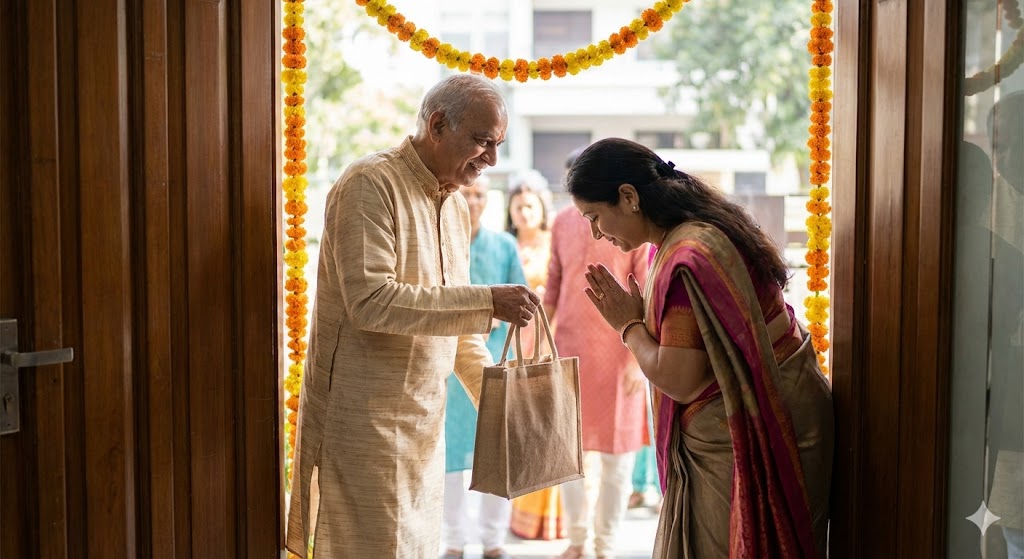
My maasi saw it. She quietly picked up two packets and handed them to him and his colleague.

The young man’s face changed completely. “Auntyji, this is for us?”

The whole moment lasted fifteen seconds. But it raised a question I’ve been thinking about since: In India, who exactly is supposed to receive a return gift? And who do most hosts accidentally forget?

The answer is more nuanced than most people realize—and getting it right makes you the kind of host people genuinely remember.

The Philosophical Foundation: “Atithi Devo Bhava”

Before we get into categories and checklists, let’s understand the root.

The Sanskrit phrase “Atithi Devo Bhava”—”The guest is God”—comes from the Taittiriya Upanishad. It’s not metaphor. It’s instruction. Ancient Indian tradition held that anyone who crosses your threshold deserves to be treated with divine respect.

Historically, when guests left a function, they were given:

  • Men: A dhoti

  • Women: A saree + Thamboolam (betel leaves + items)

This was given to every single person who attended, regardless of their relationship to the host.

The principle: No guest should leave your home empty-handed. Not because you’re obligated in a transactional sense, but because their presence honored your occasion.

That principle hasn’t changed. The packaging has. But when hosts ask “Who should get a return gift?”, the honest traditional answer is: everyone who came.

Executing that perfectly in a 200-person wedding is the challenge. Let’s break it down by category.

Category 1: Invited Guests (Core Recipients—No Question)

This is the obvious group everyone plans for. But even here, there are layers:

Adult Guests Who RSVP’d and Attended

Full return gift—no debate.

These are the people you planned for, who made the effort to come, who brought a gift or blessing, who sat through your ceremony. Every single one gets a return gift, without exception.

Mistake hosts make: Running out because they planned for exactly the RSVP count. This is why the +10% buffer (from our earlier article) exists.

Adult Guests Who Came Unannounced (But Are Welcome)

Full return gift—same as planned guests.

Your neighbor’s cousin who came along, the colleague who heard about it and dropped in, the family friend who was in the city. If they’re in your home, they’re your guest. They receive.

This is where having 5–10 extra return gifts pre-packed saves your dignity.

Guests Who Couldn’t Attend But Sent Gifts

Send return gift separately—don’t ignore them.

This one surprises people. In traditional etiquette, someone who sent a shagun or gift but couldn’t attend still receives a return gift. They honored your occasion from a distance. That deserves acknowledgment.

How to handle:

  • Pack 5–10 extra return gifts.

  • Courier or hand-deliver within 2 weeks of event.

  • Add a small handwritten note: “We missed you. Sending your shagun with love.”

Category 2: Children (Often Under-Planned)

Invited Children (Ages 4+)

Full return gift, age-appropriate.

If a child was specifically invited or expected to attend, they receive a return gift equal in thought (if not identical) to adult gifts.

A 6-year-old doesn’t want a brass diya. Give them something they’ll actually enjoy—stationery set, small toy, coloring book. Age-appropriate counts as thoughtful.

Uninvited Siblings (Tag-Alongs)

Judgment call—but small gesture recommended.

As discussed in the sibling jealousy article, you’re not obligated. But having 3–4 small “emergency” items (₹30–50) for tag-along children prevents hurt feelings and reflects well on you as a host.

Very Young Children (Under 2)

Optional—parents won’t notice either way.

A baby in arms isn’t conscious of receiving anything. You can include them if you like (makes a sweet memory for parents), but nobody will think less of you if you don’t.

Category 3: The “Working” Guests (Most Often Forgotten)

This is where most hosts, even experienced ones, fall short. And it matters enormously.

Priests and Pandits

Always. Without fail. With higher-value gift.

The pandit who performed your havan, conducted your pheras, chanted four hours of mantras—he is not a vendor. In Indian tradition, the priest is the most honored recipient of dakshina.

What to give:

  • ₹101–501 cash dakshina (minimum—adjust to ceremony scale)

  • Full return gift packet (same as top-tier guests)

  • Often additionally: a dhoti, fruit, sweets, and sometimes new clothes

Rule: Pandit’s gift should be visibly more substantial than regular guests. Even in a budget function.

Teachers and Gurus

Yes—especially at educational milestones (results parties, graduation, thread ceremony).

Your child’s teacher who came to the birthday. Your own guru who blessed the occasion. Treat like the pandit—elevated return gift + personal acknowledgment.

Domestic Staff at the Venue

Yes—this is what my maasi understood instantly.

The catering staff who served food for four hours. The decorator who hung 200 marigold strings. The cleaning team. The security guard at the gate who directed parking for three hours.

These people worked your event. They’re not guests in the traditional sense. But the spirit of “Atithi Devo Bhava” extends to everyone who contributed to your celebration.

What most thoughtful hosts do:

  • Separate cash envelope (₹100–300 per person)

  • OR leftover return gift packets at end of event

  • At minimum: a full meal + sweets from the function

The impact: My maasi’s gesture to that server took five seconds. That young man will remember that party—and that family—his entire life. That’s what good hosting does.

Your Own Household Help

Absolutely—first priority, not last.

Your bai, driver, cook, watchman—the people who made extra effort so your function ran smoothly, who set up chairs, who ran errands all day. They deserve a return gift and typically a cash bonus.

Common mistake: Hosts give elaborate gifts to colleagues they barely know but forget to give anything to the driver who made 12 grocery runs and worked till midnight.

Category 4: Family Members (Complicated but Important)

Immediate Family Who Helped Organize

Tricky. They didn’t “attend” as guests—they worked alongside you. But they also deserve acknowledgment.

What works:

  • Separate personal gift (not same as mass return gifts)

  • Cash envelope or experience gift

  • A heartfelt thank-you card at minimum

Don’t: Hand your sister who managed the entire catering logistics the same ₹80 return gift packet every other guest got. She deserves more.

Elderly Relatives (Nana, Dadi, Bua, Maasi)

Always receive return gifts—and slightly elevated versions.

Elders who traveled, who gave blessings, who sat through a 6-hour function—they deserve extra acknowledgment. Many traditional families give elders:

  • Full return gift

  • Additional sweets or fruits

  • Cash shagun (₹51–501 based on relationship)

  • Sometimes new clothes

Rule: The older the relative and the longer they traveled, the more substantial the acknowledgment.

Out-of-Town Guests

Full return gift + something extra for the travel.

Someone who came from Lucknow for your Delhi function, stayed overnight, missed two days of work—they deserve more than the same packet everyone local received.

What thoughtful hosts add:

  • Travel snacks for the journey back

  • Slightly upgraded return gift

  • Personal thank-you from the host themselves

Category 5: People Who Often Get Left Out (Don’t Let This Happen)

Based on real event experience, here are the people hosts most commonly forget:

1. The Wedding Photographer/Videographer
They worked 10+ hours. They are not just vendors. Give them a full meal, desserts, and a return gift packet.

2. The Florist/Decorator’s Team
Same logic. They were in your space, contributing to your day.

3. The DJ or Musician
Especially at informal events where they’re “part of the vibe.” A shagun envelope costs ₹20 and means the world.

4. Children of Your Staff
If your household help’s child came along because there was no one to leave them with—they’re in your home. Give them something small.

5. The Neighbor Who Helped
Lent tables, helped park cars, kept an eye on the entrance. They weren’t invited guests but they contributed. A return gift is the right gesture.

6. Late-Arriving Guests
Functions run long. Some guests arrive after return gifts are distributed. Don’t let them go home without one. Keep 5–10 packets aside specifically for latecomers.

Who Does NOT Need a Return Gift

Etiquette works both ways. You don’t need to over-extend:

Vendors you’ve already paid fairly
Caterers, tent house guys, sound system rental—if you’ve paid market rate, a tip is thoughtful but a formal return gift isn’t expected.

People who explicitly declined attendance
They said no. If they didn’t send a gift either, no obligation exists. If they sent a gift, see Category 1 (send separately).

Random well-wishers on social media
Someone commenting “congratulations!” on your Facebook post doesn’t trigger return gift obligation.

Practical Distribution Strategy

Knowing who deserves a gift is half the battle. Executing it smoothly is the other half.

Pre-Event Preparation (2 Days Before)

1. Main gift count: Confirmed guests + 10% buffer
2. Extra small gifts: 5–10 for surprise/uninvited guests
3. Elevated gifts: 3–5 for priests, teachers, key elders
4. Children's gifts: Age-appropriate, separate pile
5. Staff packets: Pre-packed, kept aside separately

Distribution Timing

Weddings: At reception as guests leave—most efficient. Some place at dinner table seats.

House pujas: After prasad distribution, before guests depart.

Kids’ birthdays: At exit, as parents collect children.

Griha Pravesh: During meal or as guests depart with prasad.

The Gift Table Setup

Row 1: Main gifts (for invited adult guests)
Row 2 (separate, covered): Staff/service gifts
Row 3 (separate, labeled): Elevated gifts for pandit, elders
Small basket: Emergency extras for uninvited guests

One dedicated person at the gift table prevents confusion, ensures nobody is missed, and handles latecomers.

Regional Variations in “Who Receives”

South India: Thamboolam traditionally given to every single person on the premises—including domestic staff and helpers. The “no one leaves empty-handed” rule is very strictly observed.

Bengal: Priests receive most elaborate dakshina. Even auto drivers who brought elderly guests sometimes receive a small sweet packet from very traditional households.

Punjab/Haryana: Return gifts given to all invited guests plus immediate family helpers. Pandit always receives elevated gift.

Gujarat: Community functions include gift distribution to every household in the neighborhood, not just invited guests. Very inclusive tradition.

The Budget Impact of Getting This Right

This is a real concern. Extending gifts to “extra” people costs money.

Reality check for a 100-guest function:

Main invited guests (100): ₹100 × 100 = ₹10,000
10% buffer guests (10): ₹100 × 10 = ₹1,000
Pandit/priest (2): ₹250 × 2 = ₹500
Household staff (4): ₹80 × 4 = ₹320
Catering staff (6): ₹50 × 6 = ₹300
Emergency extras (5): ₹100 × 5 = ₹500

TOTAL: ₹12,620
Additional cost beyond main gifts: ₹2,620 (26% extra)

That ₹2,620 covers everyone comprehensively. Now compare this to the alternative—5 people feeling overlooked, a server remembering being ignored, a pandit feeling disrespected—and ₹2,620 is nothing.

Budget for it from day one using the formula: Total return gift budget = Main gifts + 25% for extensions.

The One Rule That Simplifies Everything

After all these categories, the “who deserves a return gift?” question can be simplified to one guiding principle borrowed directly from our tradition:

If someone’s presence, effort, or blessing contributed to your occasion—they deserve acknowledgment.

That includes the obvious (invited guests) and the easy-to-forget (the server who refilled water glasses for four hours). The gift doesn’t need to be equal in value. A ₹500 brass diya for a close family friend and a ₹40 sweet packet for the parking helper are both expressions of the same intention: “You mattered to this day. Thank you.”

My maasi understood this instinctively. She didn’t calculate whether the server “deserved” it or check any etiquette rules. She just knew: he was there. He contributed. He should not leave empty-handed.

That is Indian hospitality at its truest.

Have you experienced a return gift situation that felt memorable—either beautifully handled or awkwardly missed? Share in the comments—real stories teach etiquette better than any rulebook!

Leave a Comment

Your email address will not be published. Required fields are marked *