Last month, my friend Meera sent her daughter to school with 35 beautifully wrapped chocolate boxes for her birthday. At 3 PM, she got a call from the class teacher: “Please collect the chocolates. We don’t allow candy distribution anymore.”
Meera was mortified. She’d spent ₹3,500 on those chocolates. She had to scramble to the nearest stationery shop, buy 35 pencil sets at retail prices (expensive!), and rush back to school before pickup time.
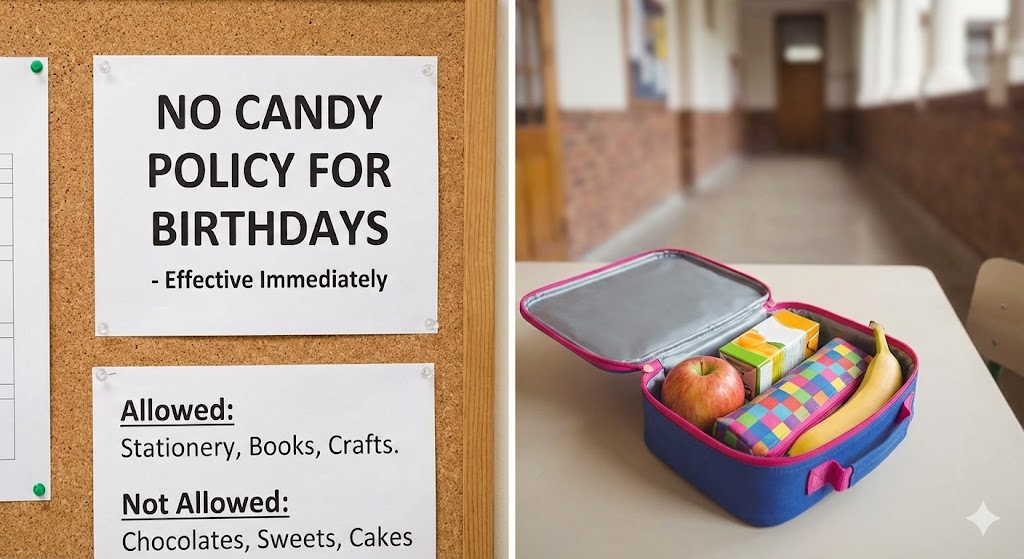
The worst part? She had no idea schools had changed their policies. Nobody told her.
If you’re a parent planning to send return gifts to school for your child’s birthday, listen up: the rules have completely changed in the last two years. What worked in 2023 doesn’t fly in 2026.
Here’s everything you need to know about what schools actually allow, what gets confiscated, and how to navigate the new “no candy” era without embarrassment or wasted money.
Why Schools Banned Candy (And It’s Not Going Back)
In June 2025, both CISCE (ICSE board) and CBSE issued formal circulars to all affiliated schools across India: monitor and reduce children’s sugar intake.
The directive was clear:
-
Set up “Sugar Boards” in schools to educate students about sugar content in foods
-
Discourage or ban birthday distributions of chocolates, candies, cakes, and sweets
-
Monitor tiffin boxes—no cakes, sweets, or instant noodles allowed
-
Promote healthy eating habits through policy changes
Real Schools That Have Implemented This
La Martiniere for Girls, Kolkata (ICSE): Announced after summer vacation 2025 that students can no longer distribute chocolates on birthdays. Alternatives suggested: pencils, colors, erasers, sticky notes.
Our Lady Queen of the Missions School, Salt Lake: No sweets, cakes, or chocolates in tiffin boxes. Birthday candy distribution also banned.
The Newtown School: Appointed a nutritionist to guide parents on healthy tiffins. No birthday candy policy in place.
Seth Anandram Jaipuria School, Ghaziabad: Implementing Sugar Boards and removing sugary items from canteens.
This isn’t one or two schools. It’s a national movement backed by education boards.
Why This Happened
The health stats are scary:
-
Type 2 diabetes cases among Indian schoolchildren have increased significantly
-
Sedentary lifestyles + excessive screen time + high sugar intake = health crisis
-
Schools realized they have a responsibility to shape dietary habits
Reality check: This policy isn’t going away. Schools that haven’t implemented it yet are planning to. Adjust your birthday plans accordingly.
What Is Actually Allowed in Schools (2026 Updated Rules)
Every school has its own specific guidelines, but here’s what’s generally acceptable across most CBSE and ICSE schools:
✅ ALLOWED: Stationery Items
This is the #1 recommended alternative from schools themselves.
Permitted items:
-
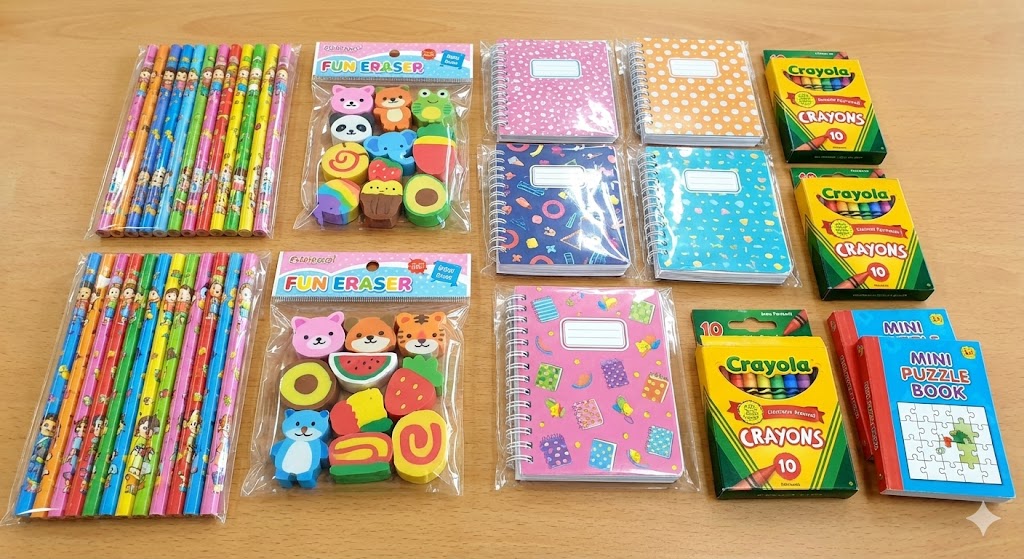
Pencils (regular or fancy designs)
-
Erasers (shaped erasers are popular)
-
Sharpeners
-
Small notebooks or sticky notes
-
Coloring pencils or crayons
-
Rulers
-
Stationery sets (combination of above items)
Why schools love these:
-
Practical—kids actually use them
-
Safe—no choking hazards, no allergens
-
Educational value
-
Easy to distribute in class
-
No mess
Cost range: ₹25-150 per set
✅ ALLOWED: Educational/Creative Items
-
Small puzzle books
-
Mini coloring books
-
Bookmarks (especially eco-friendly seed paper ones)
-
Sketch pads
-
Craft material sets (within reason)
✅ ALLOWED: Eco-Friendly Items
-
Seed paper bookmarks that can be planted
-
Small saplings (check school policy first)
-
Recycled paper products
✅ CONDITIONALLY ALLOWED: Chocolates (With Restrictions)
Some schools still allow chocolates only if:
-
Individually wrapped
-
Clearly labeled with ingredients
-
Nut-free (this is non-negotiable)
-
Egg-free (for some schools with vegetarian policies)
-
Limited quantity—counted, not excessive
-
From known/trusted brands, not homemade
Important: Even schools that allow this are moving toward banning it. Call your school office and confirm before buying.
What Is BANNED in Most Schools
❌ ABSOLUTELY NOT ALLOWED
Candies and toffees
Cakes (even mini cupcakes)
Chocolates with nuts
Homemade sweets (hygiene concerns)
Chewing gum
Chips, kurkure, or junk food packets
Carbonated beverages/juice boxes
❌ SAFETY BANNED ITEMS
Toys with small parts (choking hazard for younger kids)
Sharp objects (scissors, blades, anything pointed)
Balloons (many schools ban due to choking risk when popped)
Play-Doh or slime (mess + allergen concerns)
Whistles or noisemakers (classroom disruption)
Water guns or spray toys (disruption + hygiene)
❌ POLICY BANNED ITEMS
Electronic items (including small toys with batteries)
Playing cards or gambling-related items
Any items promoting brands/commercialism (some schools)
Religious symbols (in secular schools)
My neighbor learned this the hard way—she sent 30 small battery-operated LED keychains. The school confiscated them as “electronic devices” under their prohibited items list.
How to Check Your Specific School’s Policy
Don’t assume. Don’t guess. Always verify. Here’s how:
Step 1: Check the School Handbook
Most schools publish annual handbooks with clear policies on birthday celebrations. Look for sections titled:
-
“Birthday Celebrations”
-
“Distribution Guidelines”
-
“Prohibited Items”
-
“Canteen and Food Policy”
Step 2: Ask the Class Teacher Directly
Send a WhatsApp or email: “My child’s birthday is coming up. What items are allowed for classroom distribution?”
Most teachers respond within 24 hours with clear guidelines.
Step 3: Check School WhatsApp Groups
Other parents have probably already asked or shared their experiences. Scroll through past messages.
Step 4: Look for Official Circulars
Schools sometimes send circulars at the beginning of the academic year outlining new policies. Check your email archive.
Sample school guidelines (from an actual school circular in 2024):
-
Birthday celebrations restricted to respective class only
-
Only limited (counted) items allowed
-
Permitted items: Candies/toffees, chocolates (Note: This school hasn’t updated to no-candy policy yet, but many have)
-
Extra or prohibited items will be confiscated
The 15 Safest School-Approved Gift Ideas (2026)
Based on current policies and real parent feedback:
For Nursery-KG (Ages 3-6)
1. Chunky crayons set (₹30-50) – Easy to grip, non-toxic
2. Large erasers (animal shapes) (₹20-40) – Fun + functional
3. Sticker sheets (₹25-45) – Kids love them, mess-free
4. Small coloring books (₹40-70) – Quiet activity
5. Jumbo pencils (₹35-60) – Age-appropriate thickness
For Classes 1-5 (Ages 6-11)
6. 7-in-1 stationery sets (₹80-150) – Includes pencils, eraser, sharpener, ruler, pouch
7. Themed mechanical pencils (₹50-80) – Popular characters
8. Mini puzzle books (₹60-100) – Brain teasers, Sudoku
9. Sketch pens sets (12 colors) (₹70-120) – Always appreciated
10. Bookmarks with quotes (₹30-60) – For reading enthusiasts
For Classes 6-8 (Ages 11-14)
11. Gel pen sets (₹80-150) – Trendy colors, smooth writing
12. Sticky note pads (₹50-90) – Useful for study organization
13. Wooden pencils with quotes (₹40-80) – Motivational messages
14. Mini notebooks (A6 size) (₹60-100) – Journaling, notes
15. Eco-friendly seed paper bookmarks (₹50-90) – Trendy + sustainable
Budget Planning for School Distribution
Small class (20-25 students): Budget ₹2,000-3,000
Medium class (30-35 students): Budget ₹3,000-4,500
Large class (40+ students): Budget ₹4,000-6,000
Average per-child cost: ₹80-120 is the sweet spot for school distributions.
Cost Comparison Example
Option 1: Branded chocolate boxes
-
Cost: ₹100 per box × 30 kids = ₹3,000
-
Risk: School might not allow it
Option 2: 7-in-1 stationery sets
-
Cost: ₹115 per set × 30 kids = ₹3,450
-
Risk: Zero—100% school-approved
The ₹450 extra is worth the peace of mind.
The Allergy Safety Checklist
Even with non-food items, safety matters:
✅ Nut-free (critical for food items)
✅ Non-toxic materials (check for BIS certification on toys)
✅ No small parts (choking hazard for younger siblings who might attend)
✅ Individually packaged (hygiene)
✅ Unscented (some kids have fragrance sensitivities)
✅ Gender-neutral (avoid pink-for-girls, blue-for-boys stereotypes)
What Happens If You Send Banned Items
Scenario 1: Teacher confiscates items
-
You get a call to collect them
-
Your child feels embarrassed
-
You scramble for replacements
Scenario 2: School sends note in diary
-
Formal warning about policy violation
-
Items returned, distribution canceled
-
Awkward conversation with your child
Scenario 3: Items distributed, then parents complain
-
Angry WhatsApp messages from health-conscious parents
-
Principal involvement
-
Your reputation takes a hit
Avoid all this—just follow the rules.
Pro Tips from Parents Who Got It Right
Tip 1: Order stationery sets 2 weeks in advance. Bulk orders (25-50 pieces) get discounts.
Tip 2: Personalize with your child’s name and birthday date on packaging. Adds thoughtful touch for ₹5-10 extra.
Tip 3: Add a small thank-you card from your child. Teachers love this.
Tip 4: Count exact number of classmates + 2 extra for teachers. Don’t send 50 gifts for a 30-student class—wasteful.
Tip 5: Send items to school 1 day before birthday if possible. Gives teacher time to organize distribution.
The “Emergency Backup Plan”
Some parents keep a backup stash at home:
-
50 pencils (₹10-15 each in bulk)
-
50 erasers (₹8-12 each)
-
50 small notebooks (₹20-30 each)
Total investment: ₹2,000-3,000
Benefit: If school suddenly changes policy or you forget, you have safe, approved items ready to send.
Final Thoughts
That friend whose chocolates got rejected? She now keeps a WhatsApp note in her phone with her kids’ school policies, updated every year.
She told me, “I learned the hard way. Now I send stationery sets for every birthday—both my kids’ classes. Zero stress, zero drama, and kids are actually happy with them.”
The no-candy rule felt shocking at first, but once you accept it, planning becomes simple. Stationery works. It’s practical, safe, appreciated, and actually used.
The days of candy distribution are over. And honestly? That’s probably better for everyone—kids’ health, parents’ peace of mind, and teachers’ classroom management.
What do you send for school birthday distributions? Have you faced confiscation or policy changes? Share your experiences in the comments—other parents need to know what’s working in different schools!